
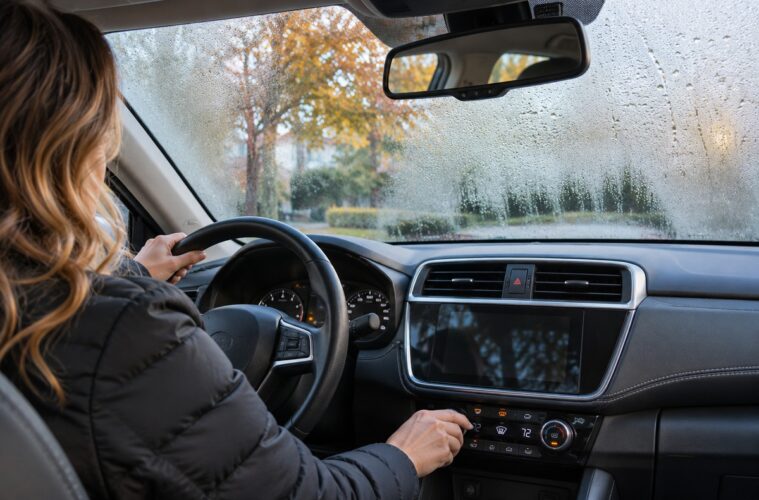
You get into your car on a chilly morning, start the engine, and suddenly the windshield turns cloudy. You wipe the glass, but the fog comes right back.
If your car windows fog up inside, you’re dealing with condensation. And while it’s common during colder months, it can become a serious visibility problem if you don’t know how to clear it properly.
The good news is that most foggy windows are easy to fix. But sometimes, persistent condensation can signal a moisture problem inside your vehicle.
Here’s why it happens, how to clear your windshield quickly, and seven things to check if the problem keeps returning.
Why Do Car Windows Fog Up Inside?
Condensation forms when warm, moisture-filled air touches a colder surface.
On a chilly morning, the inside of your windshield may be significantly colder than the air inside your car.
Moisture from your breath, damp clothing, wet floor mats, and other sources can condense on the glass, creating a layer of tiny water droplets.
That’s what makes the windshield appear foggy.
The more moisture trapped inside your vehicle, the worse the problem can become.
1. You’re Using Recirculated Air
Most vehicles have a recirculation button that keeps outside air from entering the cabin.
It’s useful when you want to cool the interior quickly or temporarily avoid outside odors.
However, leaving recirculation enabled during cold, damp weather can trap moisture inside.
As passengers breathe, humidity builds up, making the windows more likely to fog.
How to Fix It
Switch the ventilation system to fresh-air mode when defogging the windows.
This allows the system to bring in outside air instead of repeatedly circulating humid cabin air.
Many modern vehicles automatically disable recirculation when the windshield defroster is selected.
2. Your Floor Mats or Carpets Are Wet
Wet shoes, rainwater, spilled drinks, and damp clothing can introduce surprising amounts of moisture into a vehicle.
Carpeting and floor mats can hold that moisture long after the visible water disappears.
As the cabin warms up, trapped moisture evaporates into the air and can condense on the cold windows.
How to Fix It
Remove wet floor mats and let them dry completely.
Check underneath the mats for damp carpeting.
If the carpet remains wet or smells musty, investigate possible water leaks rather than simply covering the area.
Persistent moisture can also contribute to unpleasant interior odors. Our guide to why your car AC smells musty explains other places moisture can accumulate.
3. Your Cabin Air Filter Is Dirty
A clogged cabin air filter can restrict airflow through the heating and ventilation system.
When airflow is reduced, the defroster may struggle to clear condensation as effectively.
A dirty filter isn’t necessarily the source of the moisture, but it can make the problem harder to manage.
How to Fix It
Inspect the cabin air filter and replace it if necessary.
Many vehicles have a filter behind the glove compartment, although the location varies by model.
Use the correct replacement filter and follow the manufacturer’s recommended service interval.
If airflow remains weak after replacing the filter, the ventilation system may need further inspection.
4. Your Air Conditioning Isn’t Removing Moisture
Your vehicle’s air conditioning system does more than cool the cabin.
It can also remove moisture from the air.
That’s why many cars activate the AC compressor automatically when you select the windshield defroster, even when the heater is running.
If the AC system isn’t operating properly, the vehicle may struggle to remove humidity.
Keep in mind that some vehicles prevent the compressor from running in very cold conditions to protect the system.
How to Fix It
Select the windshield defroster and follow the climate-control instructions in your owner’s manual.
In many vehicles, using warm air with the AC enabled helps clear interior condensation.
If the windows remain foggy despite proper settings, have the HVAC system inspected.
5. Your Windows Have a Film on the Inside
Over time, interior glass can accumulate a thin layer of residue.
Dust, fingerprints, cleaning products, and vapors from interior materials can leave the windshield looking hazy.
Moisture may spread unevenly across this film, making fogging more noticeable and reducing visibility.
How to Fix It
Clean the inside of your windshield using an automotive glass cleaner and a clean microfiber towel.
Avoid applying oily or greasy household products to the glass.
A clean windshield won’t eliminate condensation entirely, but it can make the glass easier to clear and improve visibility.
6. Water Is Leaking Into the Vehicle
If your windows fog up heavily even when nobody has been inside the vehicle for hours, excess moisture may be trapped somewhere in the cabin.
Possible entry points include:
- Damaged door weatherstripping
- Leaking windshield seals
- Clogged sunroof drains
- Blocked body drainage channels
- Damaged trunk seals
- Air conditioning drain problems
Water may collect underneath carpeting or in the spare-tire compartment without being immediately obvious.
How to Fix It
Inspect the cabin for dampness, especially after heavy rain or a car wash.
Check the passenger footwell, trunk, and areas beneath floor mats.
If you discover water, identify and repair the leak before drying the interior thoroughly.
Otherwise, the condensation will likely return.
7. Your Heater Core Could Be Leaking
This is less common, but it’s important to recognize.
The heater core uses hot engine coolant to warm the air entering the cabin.
If the heater core develops a leak, coolant may enter the HVAC housing or passenger compartment.
Possible symptoms include:
- Persistent windshield fogging
- A sweet smell inside the vehicle
- A greasy or difficult-to-clean film on the windshield
- Damp carpeting near the dashboard
- Unexplained coolant loss
These symptoms don’t prove the heater core is leaking, but they warrant inspection.
How to Fix It
Check the coolant level only when the engine is completely cool, following the owner’s manual.
Never remove a hot cooling-system cap.
If you suspect a heater-core leak, have the vehicle inspected by a qualified technician.
A coolant leak is not something to solve with an air freshener or repeated windshield wiping.
How to Defog Your Windshield Quickly
When your windshield suddenly fogs up, use this sequence:
- Turn on the front windshield defroster. Direct airflow toward the glass.
- Increase the fan speed. More airflow can help clear condensation.
- Use warm air. Heating the glass helps reduce condensation.
- Enable AC if your vehicle allows it. Air conditioning can remove humidity.
- Turn off recirculation. Bring in fresh outside air.
- Use the rear defogger. Activate the heated rear window if equipped.
If visibility is severely reduced, pull over safely until the windows are clear.
Don’t continue driving while trying to see through a fogged windshield.
Should You Use Hot or Cold Air to Defog Windows?
For condensation on the inside of the windshield during cold weather, warm, dehumidified air is generally effective.
Warm airflow helps heat the glass, while air conditioning can reduce humidity.
For condensation on the outside of the windshield during hot, humid weather, the problem is different.
If the AC makes the glass colder than the outside air, moisture can form on the exterior surface.
Using the windshield wipers and adjusting the cabin temperature can help.
The important thing is identifying which side of the glass is fogging.
How to Prevent Your Car Windows From Fogging Up
Once the glass is clear, a few simple habits can help prevent the problem from returning.
- Keep the inside of the windshield clean.
- Dry wet floor mats before putting them back.
- Avoid leaving damp clothing or towels in the vehicle.
- Use fresh-air mode when appropriate.
- Replace a clogged cabin air filter.
- Repair water leaks promptly.
- Keep the HVAC system working properly.
- Remove snow or standing water from shoes before entering.
If the cabin stays unusually humid, consider checking for hidden moisture beneath the carpeting.
A moisture absorber may help with minor humidity, but it won’t fix an active leak.
Frequently Asked Questions
Why do my car windows fog up overnight?
Moisture trapped inside the cabin can condense on cold glass as temperatures fall overnight. Wet carpeting, damp floor mats, or a water leak can make the problem worse.
Why does my windshield fog up when I turn on the heater?
Warm air can carry moisture from the cabin onto a cold windshield. Using the windshield defroster, fresh-air mode, and AC dehumidification where available usually helps.
Does turning on the AC help defog windows?
Yes. In many vehicles, the AC system removes moisture from the air, helping the windshield clear faster. Compressor operation may be restricted in very cold conditions.
Can a dirty cabin air filter cause foggy windows?
A clogged filter can reduce airflow and make defogging less effective, although it isn’t usually the primary source of moisture.
Is it normal for car windows to fog up inside?
Occasional condensation during cold or humid weather is normal. Heavy, persistent fogging, especially with wet carpets or coolant loss, deserves further investigation.
Final Thoughts
Foggy car windows are usually caused by a simple combination of moisture and temperature differences.
Start by using the windshield defroster correctly, turning off recirculation, and keeping the interior dry.
If the problem keeps returning, check for wet carpeting, restricted airflow, or a possible water leak.
A clear windshield isn’t just about comfort. It’s essential for safe driving.
Recommended Products
Check this out on Amazon – Automotive Glass Cleaner
Check this out on Amazon – Microfiber Glass Cleaning Towels
Check this out on Amazon – Car Moisture Absorber
Disclosure: This article may contain affiliate links. If you purchase through these links, MotorReview may earn a commission at no additional cost to you.