
Your car started perfectly yesterday. Today, you turn the key or press the start button, and the engine barely turns over.
A weak battery can seem to fail without warning, but there are often clues before it reaches that point.
Knowing the signs your car battery is dying can help you avoid a dead vehicle in your driveway, a parking lot, or somewhere considerably less convenient.
And with colder weather approaching, battery problems become especially important to watch for. Low temperatures reduce a battery’s available starting power, making an already weak battery more likely to fail.
Here are seven warning signs you shouldn’t ignore, along with ways to determine whether your battery actually needs replacing.
1. Your Engine Takes Longer to Start
One of the most common signs of a weakening battery is a slow engine crank.
Normally, your engine should turn over at a consistent speed before starting.
When the battery becomes weak, you may notice the engine cranking more slowly or struggling for an extra second or two.
The starter motor requires a substantial amount of electrical power, so reduced battery performance can become noticeable during startup.
What to Watch For
- The engine turns over more slowly than usual.
- Starting takes longer on cold mornings.
- The vehicle occasionally struggles after sitting overnight.
- The starter sounds weaker than it did previously.
A slow crank doesn’t automatically mean the battery is bad. Corroded connections, a failing starter, and charging-system problems can produce similar symptoms.
If you’re unsure what’s causing the problem, our guide to bad starter or bad battery symptoms can help you narrow it down.
However, it’s a good reason to have the battery tested.
2. Your Headlights Dim When Starting the Car
Have you noticed your headlights getting noticeably dimmer when you start the engine?
Some brief dimming during startup can be normal because the starter draws a large amount of current.
But unusually severe dimming, especially when combined with slow cranking, may indicate a weak battery or poor electrical connection.
You might also notice interior lights flickering or dashboard displays briefly resetting.
What to Do
Check whether the problem happens repeatedly.
If it does, have the battery and charging system tested rather than immediately buying a replacement battery.
3. You Hear Clicking Instead of the Engine Starting
You get into your car, press the start button, and hear clicking.
Unfortunately, the engine doesn’t start.
A rapid clicking sound can occur when the battery doesn’t have enough available power to operate the starter properly.
However, clicking can also result from poor battery connections, starter problems, or other electrical faults.
What to Do
If the battery is discharged, a jump-start may get the engine running.
But don’t assume the problem is solved simply because the car starts afterward.
The battery could be deteriorating, or the charging system might not be replenishing it properly.
If the vehicle repeatedly needs jump-starts, have the battery and charging system inspected.
4. Your Battery Is Several Years Old
Car batteries don’t last forever.
Many conventional 12-volt automotive batteries last approximately three to five years, although actual lifespan depends on climate, driving habits, battery design, and vehicle electrical demands.
High temperatures can accelerate battery deterioration, while cold weather can expose an already weakened battery.
Short trips can also contribute to problems if the battery isn’t being adequately recharged.
How to Check Battery Age
Look for a date label or code on the battery.
The format varies by manufacturer, so you may need to consult the battery brand’s documentation.
If your battery is approaching the end of its expected lifespan, consider having it tested before winter.
Age alone doesn’t mean the battery needs immediate replacement, but it increases the importance of checking its condition.
5. Your Car’s Electrical Features Behave Strangely
Modern vehicles depend on stable electrical power.
When battery voltage becomes unusually low, you may notice unexpected electrical behavior.
Possible symptoms include:
- Dashboard displays resetting
- Interior lights becoming unusually dim
- Power accessories operating inconsistently
- Multiple warning messages appearing during startup
- The infotainment system restarting unexpectedly
These symptoms can also have other causes, including loose connections, alternator problems, or faulty electronic components.
Don’t assume every electrical issue is caused by the battery.
If several problems appear together, especially during startup, testing the battery is a sensible first step.
6. Your Battery Terminals Are Corroded
Open the hood and inspect the battery, if it is safely accessible.
Do you see white, blue, or greenish buildup around the terminals?
That may be corrosion.
Corrosion can interfere with the electrical connection between the battery and the vehicle.
Even a battery that still holds a charge can struggle to deliver adequate starting power if its connections are poor.
What to Do
Look for visible corrosion, damaged cables, or loose connections.
If you’re unfamiliar with battery maintenance, have a technician inspect and clean the terminals.
Avoid touching corrosion with bare hands, and never work on a damaged, leaking, or swollen battery.
If the battery case is cracked or leaking, professional service is the safer choice.
7. Your Car Needs Frequent Jump-Starts
Needing a jump-start once after accidentally leaving the lights on doesn’t necessarily mean your battery is failing.
But needing repeated jump-starts is a different story.
Something is preventing the vehicle from having enough electrical power to start reliably.
Possible causes include:
- A deteriorating battery
- An alternator or charging-system problem
- An electrical component draining power while parked
- Loose or corroded battery connections
- Frequent short trips that don’t adequately recharge the battery
What to Do
Have the battery load-tested and the charging system checked.
If the battery passes testing, the vehicle may need an inspection for parasitic electrical drain.
Repeatedly jump-starting the car without diagnosing the problem can leave you stranded again.
How to Test Your Car Battery at Home
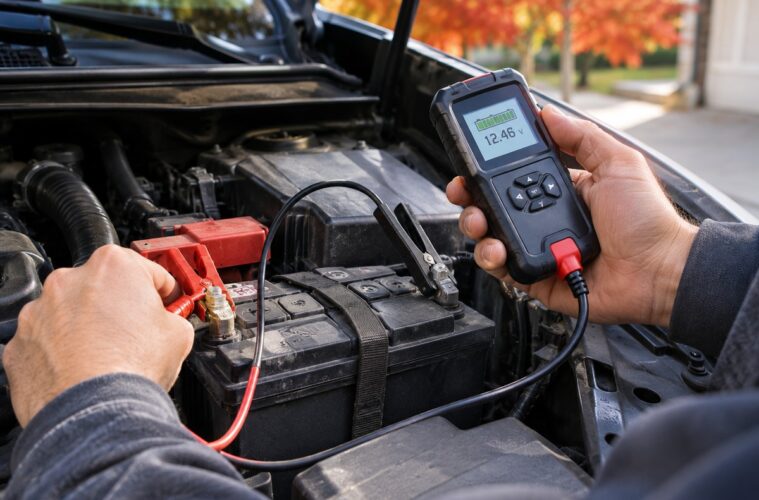
If you have a digital multimeter and can safely access the battery terminals, you can perform a basic voltage check.
Turn the vehicle off, allow the battery to rest, and follow the multimeter manufacturer’s instructions.
For a typical fully charged 12-volt lead-acid battery at room temperature, a resting voltage around 12.6 volts is common.
Here’s a general guide:
| Resting Voltage | General Interpretation |
|---|---|
| Around 12.6–12.8V | Typically well charged |
| Around 12.4V | Partially discharged |
| Around 12.2V | Significantly discharged |
| Around 12.0V or lower | Low state of charge |
These readings are approximate and depend on battery chemistry, temperature, and recent charging or electrical activity.
Important: A voltage reading alone cannot determine whether a battery is healthy.
A battery may show a reasonable resting voltage but fail to deliver enough current to start the engine.
A proper battery conductance or load test provides more useful information about its starting capability.
Some vehicles also require special procedures for battery access or electrical testing.
How Much Does It Cost to Replace a Car Battery?
Battery replacement costs vary depending on the vehicle and the type of battery required.
Conventional flooded lead-acid batteries are often less expensive than absorbed glass mat (AGM) batteries.
Vehicles equipped with start-stop systems or sophisticated electrical management may require a specific battery type.
Some vehicles also require battery registration or electronic system initialization after replacement.
Before buying a replacement, confirm the correct group size, battery technology, terminal arrangement, and required performance ratings.
Don’t substitute a cheaper battery that doesn’t meet the manufacturer’s specifications.
Can a Bad Alternator Look Like a Bad Battery?
Absolutely.
The battery supplies electrical power for starting, while the alternator normally supplies electrical power and recharges the battery when the engine is running.
If the alternator isn’t charging properly, the battery can become discharged even if the battery itself is healthy.
Warning signs of a charging-system problem can include:
- A battery or charging-system warning light
- Electrical accessories losing power while driving
- Repeated battery discharge
- Engine stalling due to electrical power loss
If the charging-system warning light appears while driving, follow the owner’s manual and arrange prompt inspection. The vehicle may eventually stop running.
Replacing the battery won’t fix a failing alternator.
How to Make Your Car Battery Last Longer
You can’t prevent normal battery aging, but a few habits may help reduce unnecessary strain.
Battery inspections are just one of the 7 car maintenance tasks most drivers forget, even though a little preventive maintenance can help avoid unexpected breakdowns.
Avoid Repeatedly Draining the Battery
Turn off lights and accessories when the engine isn’t running.
Check the Battery Connections
Have loose or corroded terminals addressed promptly.
Don’t Ignore Slow Starts
A battery that struggles to start the engine deserves testing before it fails completely.
Consider Your Driving Habits
Frequent short trips may not provide enough time to replenish the charge used during starting, especially in vehicles with substantial electrical demands.
Have Older Batteries Tested
A battery approaching the end of its expected service life is worth checking before extreme weather arrives.
Use an Appropriate Maintainer for Long-Term Storage
If a vehicle sits unused for extended periods, a compatible battery maintainer may help prevent excessive discharge.
Follow the vehicle and battery manufacturers’ instructions.
Frequently Asked Questions
What is the first sign of a dying car battery?
Slow engine cranking is one of the most common early warning signs. However, it can also indicate starter or electrical connection problems, so testing is important.
Can a car battery die without warning?
Yes. Some batteries fail suddenly, even without noticeable symptoms. Age, internal damage, and extreme temperatures can contribute to unexpected failure.
How long should a car battery last?
Many conventional automotive batteries last roughly three to five years, but lifespan varies significantly based on climate, usage, battery type, and maintenance.
Will driving recharge a weak battery?
A properly functioning charging system can replenish a discharged battery, but driving won’t restore a battery that has deteriorated internally. A deeply discharged battery may require appropriate external charging.
Should I replace my battery before winter?
Not automatically. If the battery is older, has shown symptoms, or fails a proper test, replacement may be appropriate before cold weather makes starting more difficult.
Final Thoughts
A dying car battery doesn’t always announce itself with a warning light.
Sometimes the first clue is a slower start, flickering lights, or a vehicle that suddenly needs a jump.
Recognizing these symptoms early gives you a chance to test the battery and identify the actual problem before it becomes an inconvenient breakdown.
If your battery is several years old or your car has started behaving differently, a simple battery and charging-system test is a smart place to begin.