
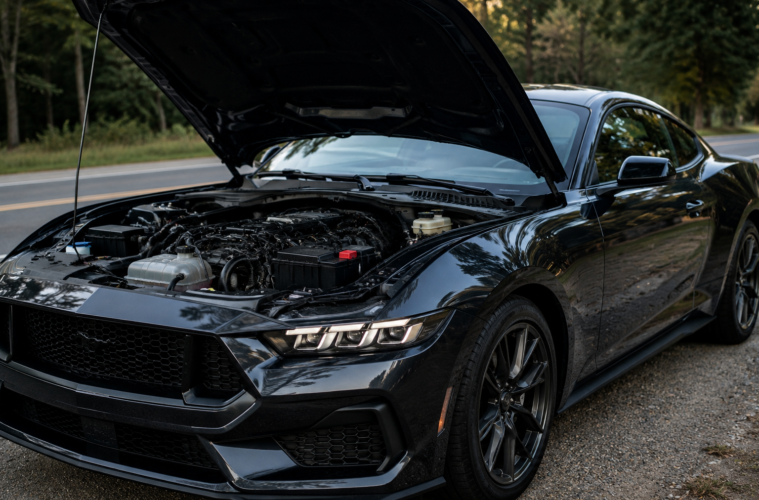
If you drive a newer Ford Mustang, there’s a new recall you should know about.
Ford is recalling 148,663 Mustang vehicles in the United States because of an electrical connection problem that could cause the vehicle to lose drive power. The issue can also affect several other important systems, including the headlights and windshield washers.
The Ford Mustang recall affects certain vehicles from the 2024, 2025 and 2026 model years.
Here’s what Mustang owners need to know.
What’s Wrong With the Ford Mustang?
The problem involves ground connections in the engine-compartment wiring harness.
Those connections can fail, potentially interrupting electrical power to several vehicle systems.
According to NHTSA, the problem could result in a loss of drive power or disable functions including the headlights, windshield washer system, air conditioning and engine cooling fan.
That’s considerably more serious than an annoying warning light on the dashboard.
Which Ford Mustangs Are Affected?
The recall covers certain:
- 2024 Ford Mustang
- 2025 Ford Mustang
- 2026 Ford Mustang
A total of 148,663 vehicles in the United States are included in the recall.
That does not mean every Mustang from those model years is affected.
Recall eligibility depends on the specific vehicle, so owners should check their VIN rather than relying on the model year alone.
What Could Happen While Driving?
One of the biggest concerns is a potential loss of drive power.
If the electrical connection fails, the Mustang could also lose functionality from systems drivers depend on for visibility and safe operation.
Potentially affected systems include:
- Drive power
- Headlights
- Windshield washers
- Air conditioning
- Engine cooling fan
NHTSA says these failures can increase the risk of a crash.
How Will Ford Fix the Problem?
Ford dealers will replace the affected engine-compartment wiring harness ground terminals.
The repair will be performed free of charge.
Owners should follow the instructions in their official recall notice or contact an authorized Ford dealer for information about their specific vehicle.
How to Check Your Mustang Right Now
You don’t need to wait for a recall letter to arrive.
Find your Mustang’s 17-character Vehicle Identification Number, or VIN, and enter it into the NHTSA recall lookup.
Your VIN can usually be found:
- At the bottom of the windshield on the driver’s side
- Inside the driver’s door jamb
- On your vehicle registration
- On your insurance documents
NHTSA’s VIN search will tell you whether your specific vehicle has an unrepaired safety recall.
What Should You Do If Your Mustang Loses Power?
If you experience a sudden loss of drive power or electrical systems while driving, concentrate on safely getting the vehicle out of traffic.
If the headlights or other safety-related systems aren’t functioning properly, avoid continuing to drive the vehicle unnecessarily.
Owners experiencing symptoms should contact a Ford dealer, particularly if their vehicle falls within the affected model years.
Don’t Assume Your Mustang Is Safe Because Everything Works Today
Recall-related defects don’t necessarily cause symptoms every time you drive.
Your vehicle may appear to operate normally even if it’s included in the recall.
That’s why checking the VIN is more useful than waiting for something to go wrong.
It takes only a few minutes and can tell you whether your Mustang has an open recall.
Recommended Products
Check this out on Amazon – Portable Jump Starter
Check this out on Amazon – Rechargeable Emergency Flashlight
Check this out on Amazon –Emergency Roadside Kit
Final Thoughts
A recall involving nearly 149,000 Mustangs deserves attention, particularly when the potential problem involves loss of drive power and important electrical systems.
Fortunately, Ford’s repair involves replacing the affected wiring harness ground terminals, and recall repairs will be performed free of charge.
If you own a 2024, 2025 or 2026 Ford Mustang, don’t assume your car is affected or unaffected based solely on its model year.
Check the VIN.
It takes a couple of minutes and gives you a much better answer than waiting to discover an electrical problem while you’re driving.