
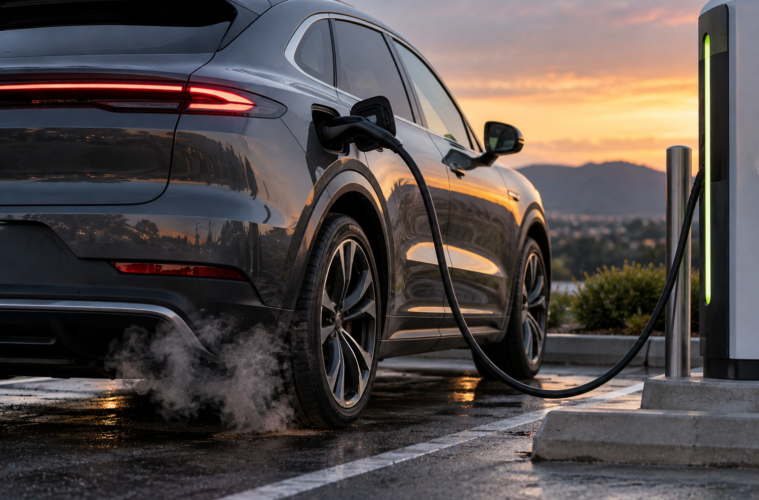
Electric car fires tend to make headlines, particularly when a major automaker announces a recall involving a potential fire risk.
The issue is back in the spotlight after Lucid announced a recall involving 27,185 Air luxury sedans in the United States. According to NHTSA, an exterior lighting circuit in affected vehicles can potentially overheat, increasing the risk of a fire.
But does that mean electric vehicles are inherently dangerous?
Not exactly.
Here’s what EV owners and shoppers should actually understand about electric car fires.
What Causes an Electric Car Fire?
Most electric vehicles use large lithium-ion battery packs mounted underneath the passenger compartment.
These batteries contain thousands of individual cells capable of storing an enormous amount of energy.
Problems can occur when battery cells are damaged, defective, improperly manufactured or exposed to extreme conditions.
Potential causes of EV fires can include:
- Severe collision damage
- Battery manufacturing defects
- Electrical short circuits
- Charging-system problems
- Flood or water damage
- Extreme overheating
- Damage to the battery pack
Not every electric-vehicle fire originates in the high-voltage battery, either.
EVs still contain conventional electrical wiring and components that can malfunction, just as they can in gasoline-powered vehicles.
The recent Lucid recall, for example, involves an exterior lighting circuit rather than the main propulsion battery.
What Is Thermal Runaway?
One reason EV battery fires receive so much attention is something called thermal runaway.
If a lithium-ion battery cell becomes damaged or overheats, it can begin releasing heat faster than that heat can dissipate.
That heat can then affect neighboring cells.
The process can continue through portions of the battery pack, producing an extremely hot and difficult-to-control fire.
This is also why a damaged EV battery needs to be treated differently from an ordinary 12-volt car battery.
Are Electric Car Fires Common?
The existence of an EV fire doesn’t automatically tell us whether electric vehicles are more likely to catch fire than gasoline-powered vehicles.
There are also far more gasoline vehicles on American roads, and comparisons can become misleading when different vehicle populations, ages and types of incidents are mixed together.
For owners, the more useful approach is understanding the specific risks associated with the vehicle they drive and responding quickly to recalls or warning signs.
Warning Signs EV Owners Shouldn’t Ignore
A serious battery problem may not always provide an obvious warning before something goes wrong.
However, EV owners should take unusual behavior seriously.
Possible warning signs include:
- Unexpected battery or electrical warnings
- Smoke
- A strong or unusual chemical smell
- Excessive heat from the vehicle
- Popping or hissing noises
- Sudden charging problems
- Rapid or unexplained battery loss
If you see smoke or suspect the high-voltage battery is overheating, move away from the vehicle and contact emergency services.
Don’t attempt to open or repair a high-voltage EV battery yourself.
What If Your EV Was in an Accident?
An EV can appear relatively normal after a collision while still having damage underneath the vehicle.
That’s particularly important because many EV battery packs are mounted along the floor.
If an accident involves significant impact to the underside of the vehicle or battery area, have the vehicle properly inspected.
The same applies after striking substantial road debris.
A battery enclosure exists to protect the cells, but it isn’t indestructible.
What About Flooded Electric Cars?
Flood damage presents another potential problem.
If an EV has been submerged or exposed to significant flooding, don’t assume it’s safe simply because the vehicle still powers on.
Saltwater exposure can be particularly problematic for electrical components.
Follow manufacturer guidance and have a flood-damaged EV professionally inspected before driving or charging it.
Can an EV Catch Fire While Charging?
It is possible, although a properly functioning EV and charging system include multiple protections designed to monitor charging.
Owners can reduce unnecessary risk by using appropriate charging equipment and having home charging equipment professionally installed when required.
Damaged plugs, cables or charging equipment shouldn’t be ignored.
And if a charging connector becomes unusually hot, repeatedly faults or shows visible damage, stop using it until the problem is identified.
Check Your EV for Recalls
This part takes about two minutes and costs nothing.
NHTSA allows owners to search for open safety recalls using their vehicle’s VIN or, for supported vehicles, license plate information.
Your 17-character VIN is usually located:
- At the bottom of the windshield on the driver’s side
- Inside the driver’s door jamb
- On the vehicle registration
- On insurance documents
Recently announced recalls may not immediately appear for every VIN because manufacturers can still be identifying affected vehicles, so NHTSA recommends checking regularly.
Don’t Ignore a Recall Because Your Car Seems Fine
This is probably the biggest mistake owners can make.
A safety recall exists because a manufacturer or NHTSA has determined that a vehicle or component creates an unreasonable safety risk or doesn’t meet minimum safety standards.
Your vehicle doesn’t need to be showing symptoms for the recall to matter.
Manufacturers are required to provide the recall remedy, which may involve repairing or replacing the defective component. Recall repairs are generally provided to affected owners free of charge.
Recommended Products
Check this out on Amazon – Emergency Window Breaker and Seat Belt Cutter
Check this out on Amazon – Rechargeable Emergency Flashlight
Check this out on Amazon – Emergency Roadside Kit
Final Thoughts
Electric car fires make dramatic headlines, but seeing another EV fire story shouldn’t automatically convince drivers that every electric vehicle is a rolling fire hazard.
What matters more is understanding the different risks created by high-voltage battery systems.
Pay attention to warning messages, don’t ignore charging problems or signs of battery damage, and check your vehicle for open recalls periodically.
And if an EV is smoking or appears to be experiencing a battery fire, get away from the vehicle and call emergency services rather than trying to become an amateur battery firefighter.
Disclosure: This article may contain affiliate links. If you purchase through these links, MotorReview may earn a commission at no additional cost to you.